Darvi
Darvi
Scientific archive · pure Gir sires
Each accession here is a pure Gir sire held to a public bull card: identity, dam best lactation, fat where listed, breeding value or star when the catalogue prints them, and the named sire line. This page is a reading room — not a product grid.
Before daughters complete their own milk records, dam kilograms remain the working language of young AI bulls. In the NDDB Pedigree Selection sample, mean 305-day yield sat near 2,573.19 kg, and only about 1.63% of recorded cows cleared four thousand kilograms. Read every high dam figure against that map.
Dam best lactation (kg) is the highest recorded lactation of the bull’s mother — the primary milk-selection proxy for young sires. Fat % belongs to that same lactation when the station prints it. Sire’s dam lactation, when present, deepens the milk story on the paternal side.
Breeding value and star rating are catalogue snapshots; they are not substitutes for re-checking the live directory. Daughter yield is often unavailable on young or incompletely proven bulls — absence is information, not a failure of the page. INAPH or station identity numbers are how the animal stays traceable when straws move.

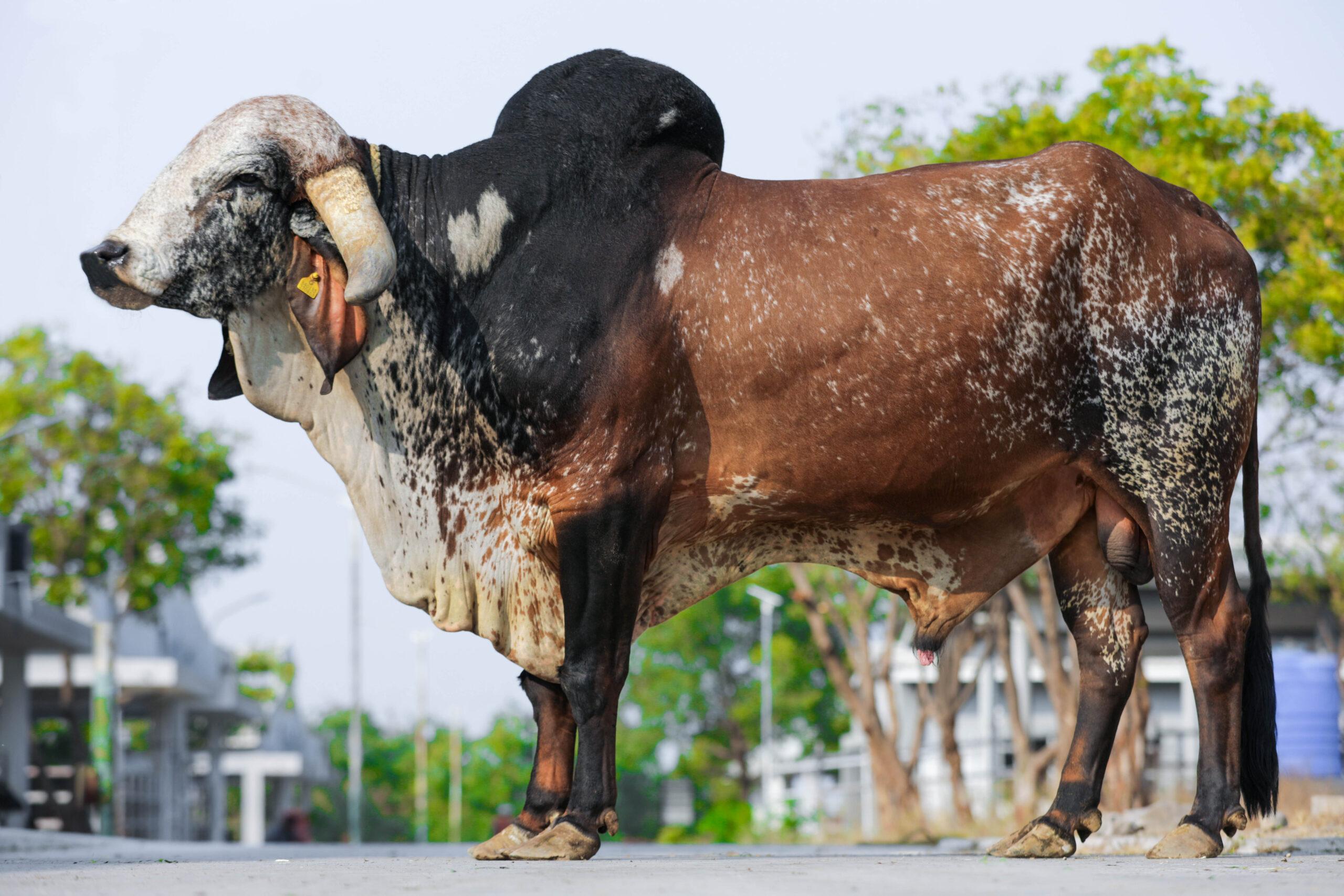
Specimen plate · Gondaliyo
GR-50149
Dam 4423 kg · 4.5% fat · BV 274 · 5*. Station photograph — re-verify live listing before use.
Open full dossier →Milk recording under Pedigree Selection is a selection map, not a promise that every Gir cow in India milks at the project mean. Beta-casein literature often finds Gir among breeds with high A2A2 frequency — near 0.93 in one multi-breed study — yet individual status still requires a laboratory test. The semen path from recorded dam to frozen dose still runs through quarantine, evaluation, and the cold chain.
For the filterable register, open the herd catalogue. For origin and type written as long essays, enter breed intelligence.
Bull figures transcribed from public Rahuri Semen Station cards · re-verify live · A2 is breed-level literature only unless a lab certificate is attached.