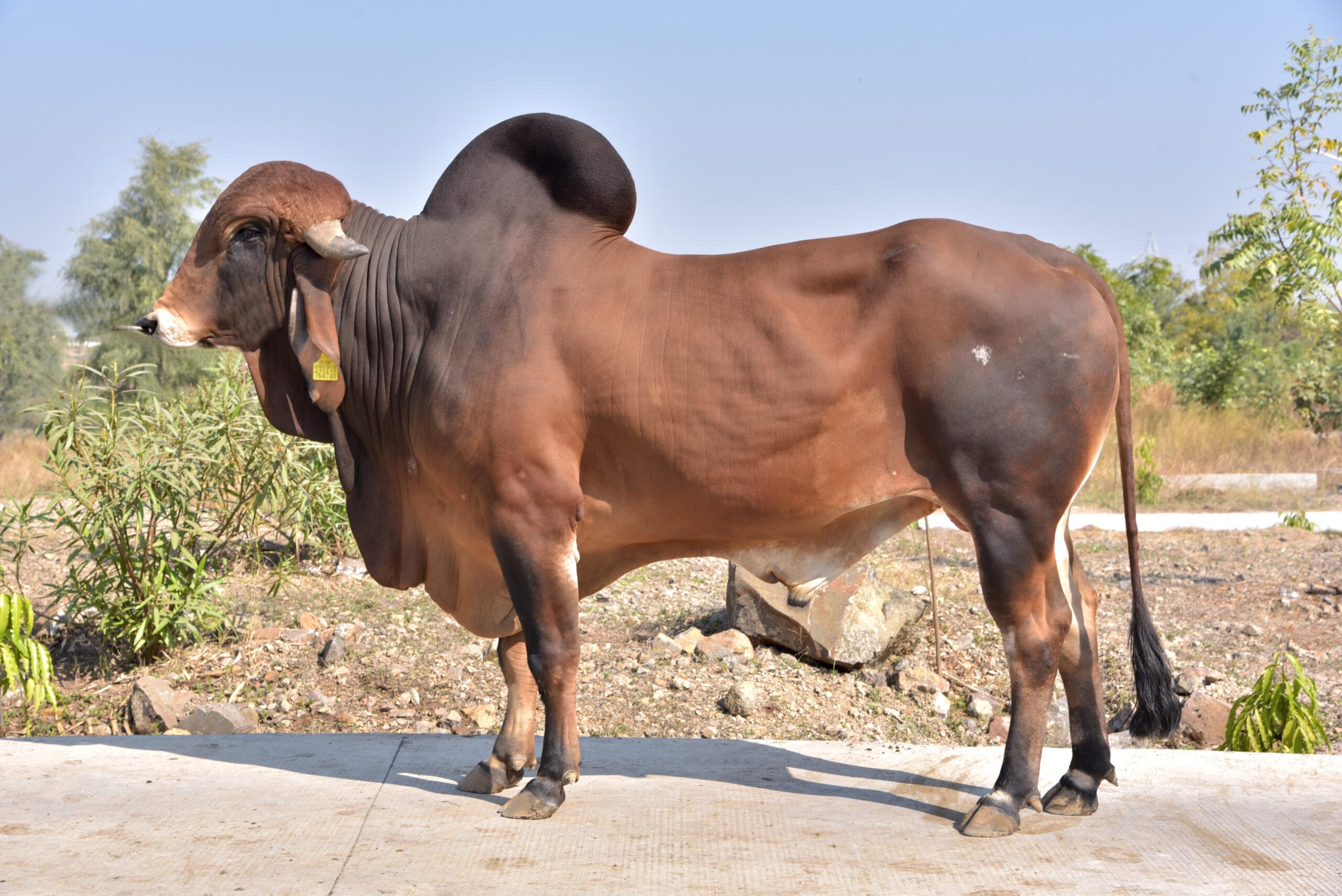
Gir

Opening…
Elite Gir females are chosen for recorded milk, udder and structure, fertility, and parentage — then used as dams of sires or as embryo donors.
In Indian pedigree-selection and HGM (high genetic merit) work, elite cows are not a marketing label. They are females with documented identity (ear tag / INAPH), parentage where possible, and milk records — typically 305-day yield and fat % — that rank them for nominated AI or donor work.
NDDB’s Pedigree Selection project for Gir in Saurashtra recorded pure Gir females across hundreds of villages. Dams above the 4,000 kg band are rare and heavily weighted when selecting bull calves for semen stations.
305-DMY, fat %, and where available protein %. Dam best-lactation figures on bull cards (e.g. 3,100–4,400+ kg) are the practical language before daughter proofs exist.
Attachment, balance, milking ease, and longevity. Poor udder structure shortens productive life even when peak yield looks strong.
Open days, conception under AI or natural service, calving interval. Single-trait milk selection can quietly erode fertility.
Mobility for grazing and free-stall systems. Feet and legs matter as much as frame for tropical farm conditions.
Mastitis history, vaccination status, handling safety. Calm donors and dams reduce injury and lab failure rates.
Sire and dam identity for inbreeding control. Without parentage, elite claims cannot support scientific breeding programmes.
Bull calves from high-yielding pure Gir dams enter quarantine, parentage and disease checks, then semen stations.
Superovulation or OPU–IVF multiplies calves from the best cows beyond one pregnancy per year.
Commercial A2-oriented dairies keep elite cows for daily production while breeding replacements.
Farms that only quote “desi high milk” without ID, lactation yields, and parentage cannot support scientific breeding or honest product genetics. Elite is a data standard, not a coat colour.
Documented identity (tag / INAPH), milk records (preferably 305-day yield and fat %), and parentage where possible — not coat colour or marketing labels alone.
Yes. High-recording females are often enrolled as donors for conventional ET or OPU–IVF when health, fertility, and welfare standards allow.
Dam milk is a strong selection signal, especially before daughter proofs exist, but environment, feed, and sire choice also shape outcomes.